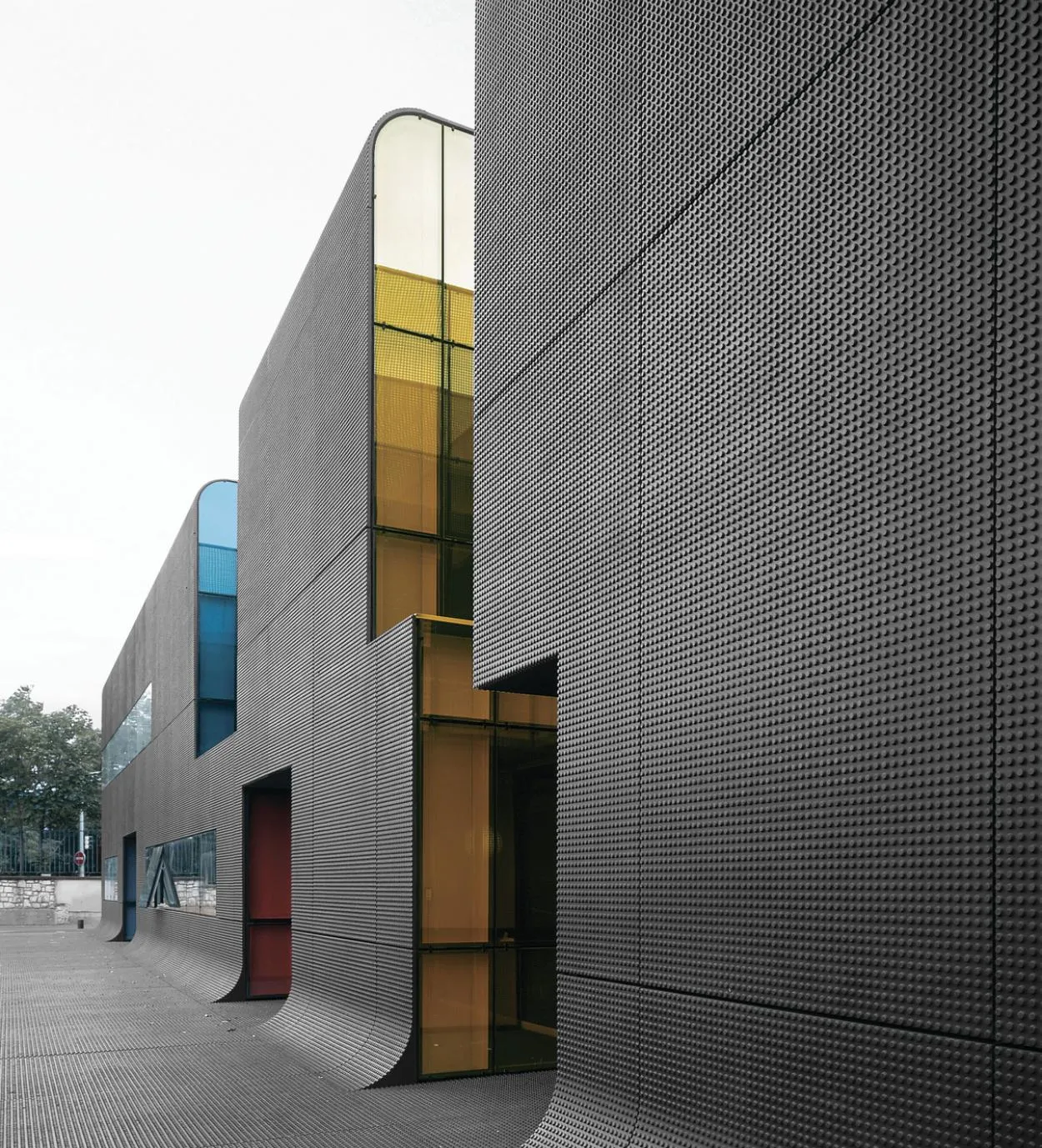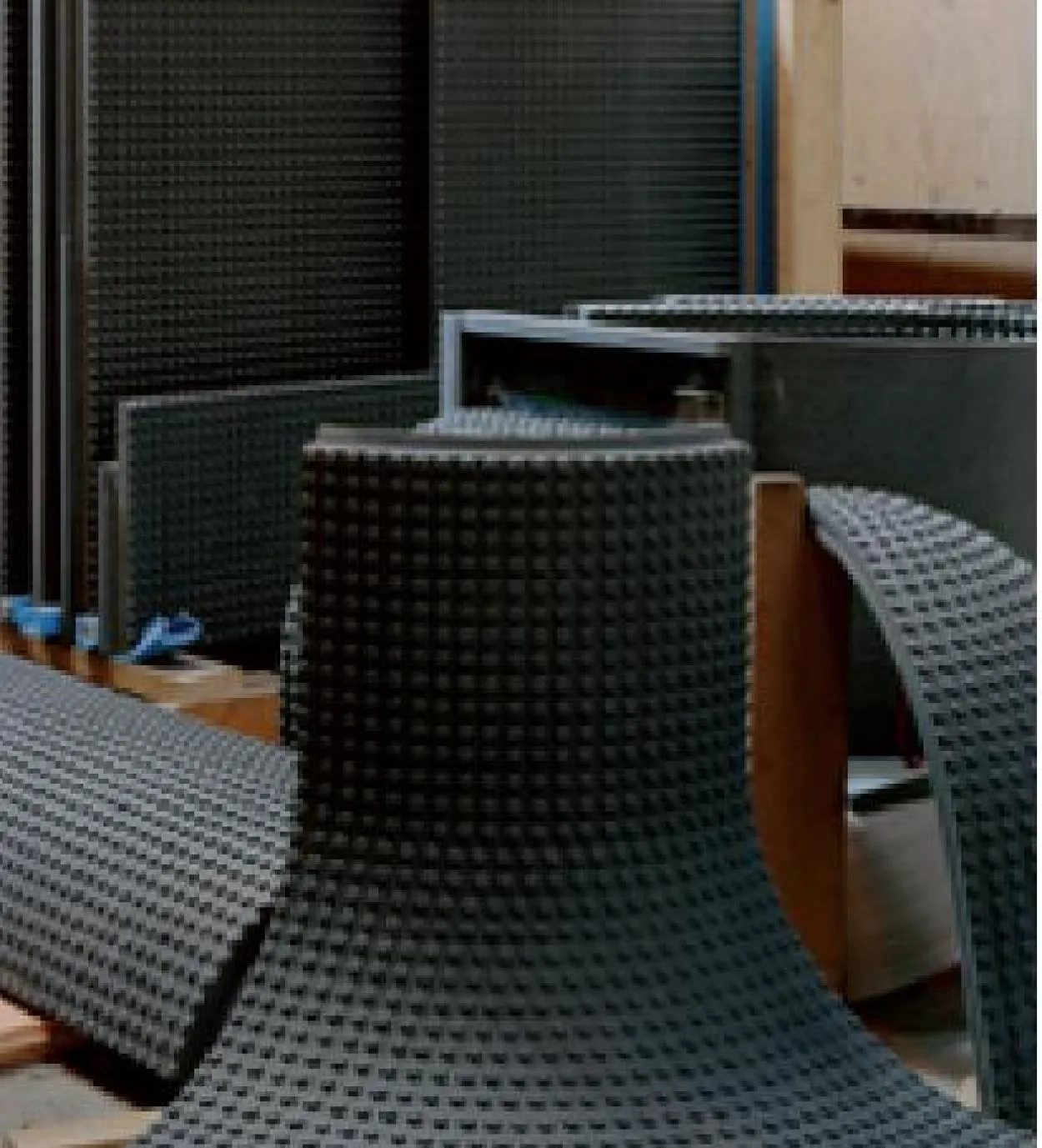
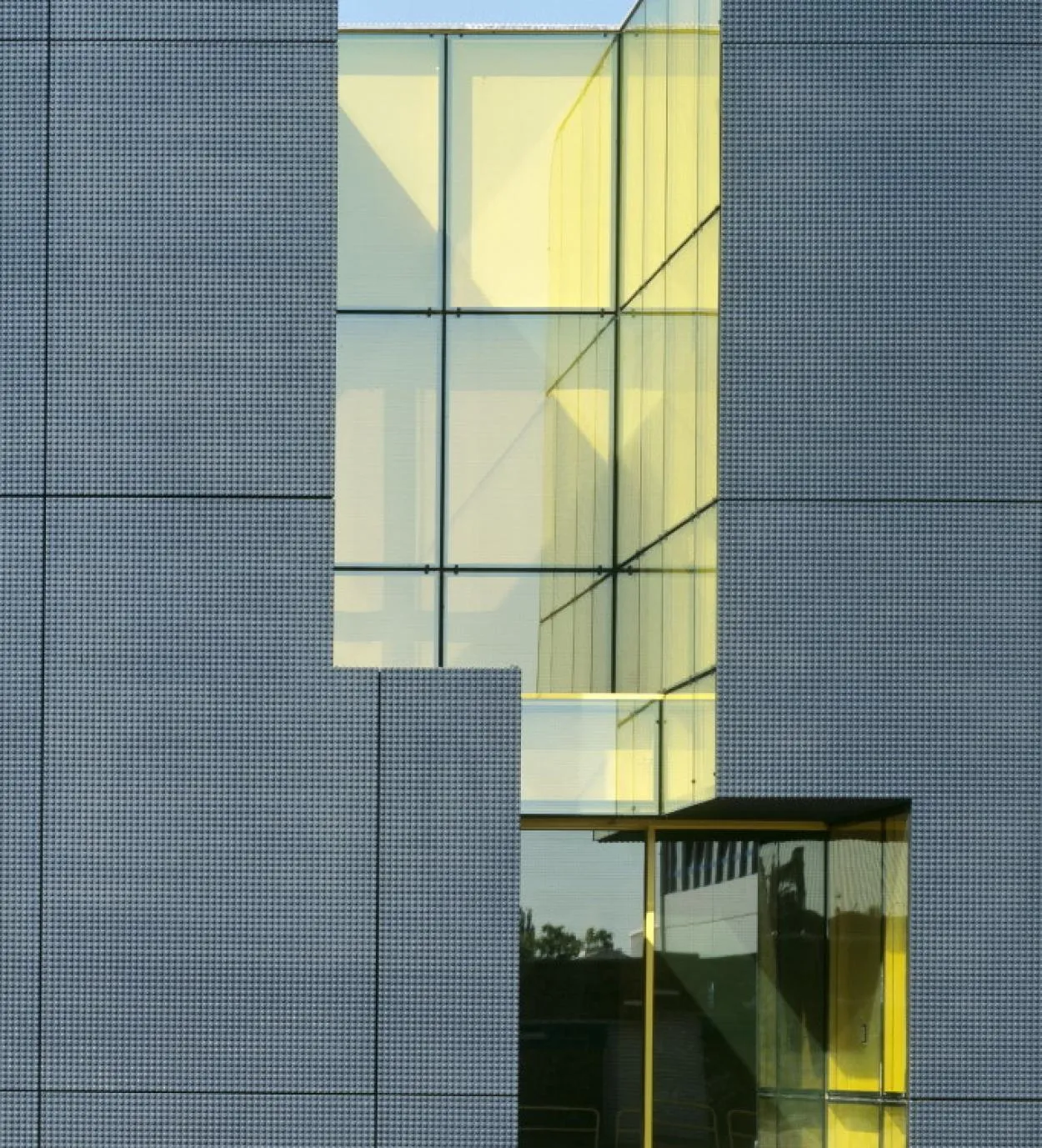
The semi-flowable nature of Ductal® Envelope facilitated the pouring of 3D panels with a fine yet nubby Lego®-style texture. Only 3 cm thick, their lightness are made for fast installation and adjusting.
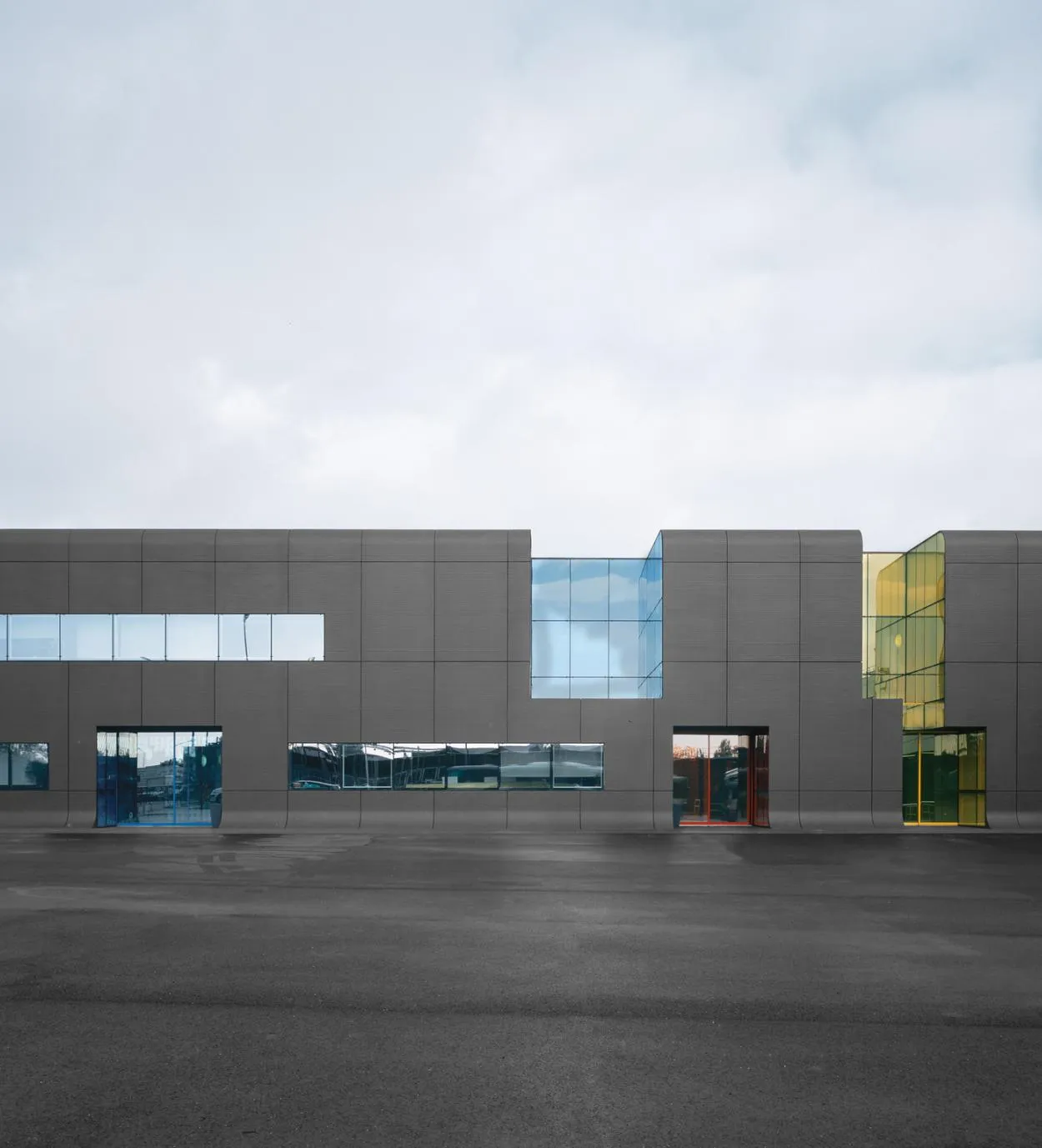
Architects Emmanuel Combarel and Dominique Marrec of the firm ECDM were hired to do the Thiais bus centre job for the RATP. The building has several functions: primarily as a command post moving traffic for nearly 300 buses, but it also has lounges designed for bus driver relaxation.
Description
The architects’ main idea was to integrate the new building in its environment by ensuring urban continuity in the commercial-industrial zone. Therefore, the building appears to materialize from the ground via panels of grey anthracite colored Ductal® Envelope. That skin conforms to the angles of the building, ground and roof and is broken up with wide windows in bright colours. The façade was the subject of a technical experimental assessment validated by the Centre Scientifique et Technique du Bâtiment (CSTB - Scientific and technical building centre).
Context
Mould fabrication is a key step in Ductal® panel fabrication. Wood covered with a silicon skin was chosen for the mould structure. Ductal® is a semi-flowable concrete that facilitates the reproduction of the finest details of the mould such as the nubs (1 cm high, 20 mm diameter) of the bus centre’s panels. That required significant thoroughness in designing and cleaning moulds and in storing panels.
Optimization
The panels are fixed to the concrete structure using 304L stainless steel brackets. These brackets have oblong holes to accommodate the geometric tolerances of the structural work and to ensure the alignment of the panels. The panels are attached to the brackets using sockets crimped into them after fabrication. Pull-out tests achieved extraction forces of 427 daN without failure of the substrate. The socket installation technique does not induce expansion stress in the substrate material. A 12 mm expansion joint between the panels accommodates dimensional variations in the components.